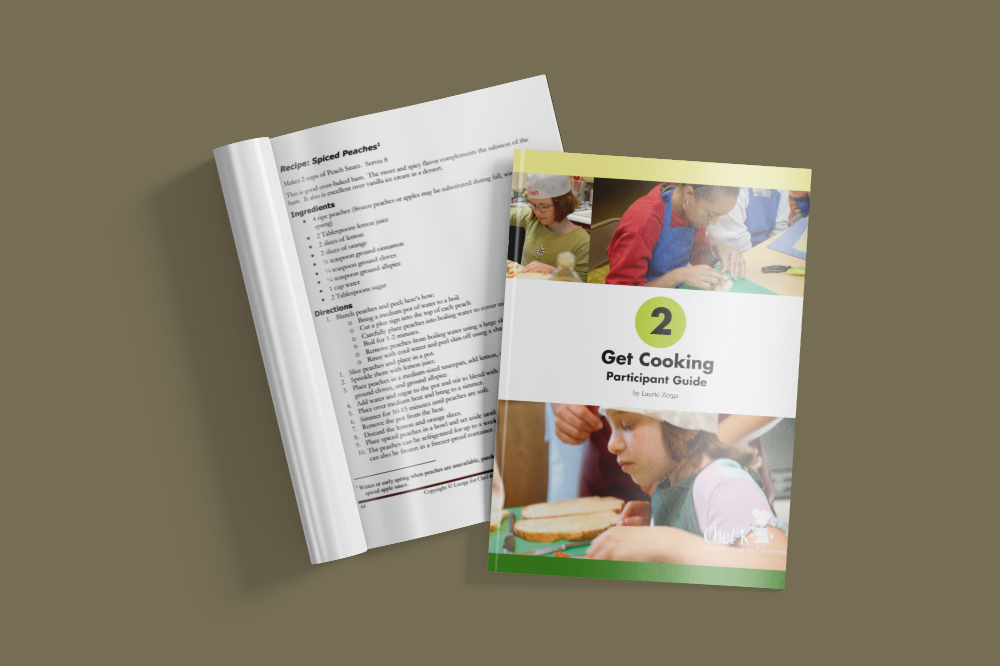
Get Cooking 2

YTGetCooking2 Top-L Text

Overview
 

This fun, hands-on course introduces children and teens to the different food groups as defined by the U.S. food and drug administration's MyPyramid. By the end of the program, participants they will have an understanding of each food groups and know how to determine serving portions and count calories.

YTGetCooking2 Top-R Image

Chef-K, Youth Training

Get Cooking 2

A kitchen is not required. Simply provide a sink and tables or a common work area to accommodate the number of students expected. Because of the nature of Organization member attendance, each class is prepared as a stand-alone session.

The course is divided into six classes, described below. These classes are optimized for delivery as two-hour sessions taught one time per week for six weeks as part of an after-school program.

  1. The Whole Grain

    Participants will learn about grains in bread, cereal, rice and pasta, as well as the importance of eating whole, rather than refined, grains. They'll also review MyPyramid recommendations on the number of servings and sample portion sizes. 

  2. Veggies aren't just green

    As participants learn about different types of vegetables, they'll become familliar with the seasonal aspect of vegetables. They'll also review MyPyramid recommendations on the number of servings and sample portion sizes. 

  3. It's the Fruit Group

    Participants will learn about different types of fruit and the seasonal nature of fruits. They'll also review MyPyramid recommendations on the number of servings and sample serving sizes. 

  4. P is for Protein

    Participants will learn the important protein group, which includes meat, fish, dry beans, eggs and nuts, as well as review MyPyramid recommendations on the number of servings and serving sizes. They'll also be introduced to a comparison of the nutrition choices of vegetarians and meat eaters. 

  5. Dairy-licious

    Participants will learn about milk, yogurt, and the cheese group, including recommended number of servings and serving sizes. 

  6. Read before eating

    Armed with an understanding of how to read a label and an awareness of the concept of calories per day, students can begin making decisions on the appropriateness of the calories in the food they are eating. They'll also have a chance to consider other aspects of a label, including sugar, fat, protein, fiber, salt...